
01
Capture
A two-band prototype explores continuous ECG contact at the wrist and ankle, alongside optical sensing for blood oxygen.
Wearable prototype researchWearable sleep intelligence
The night has more to tell us.
DOTVI is developing wearable technology and machine learning to explore signs of sleep apnoea through the body’s overnight signals.
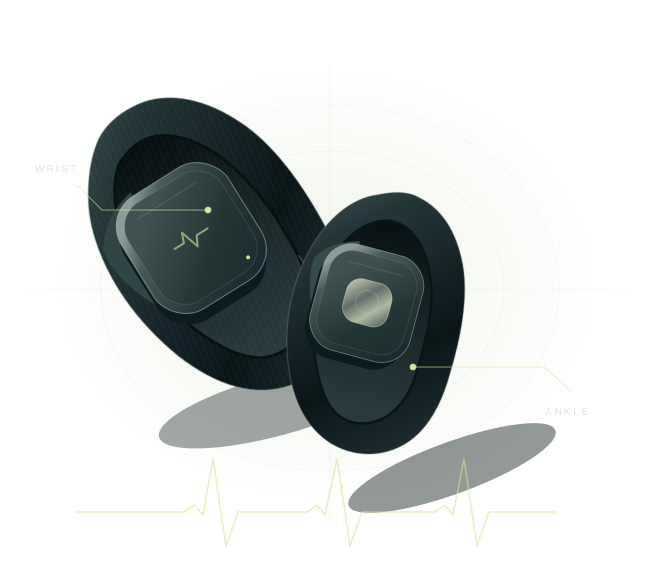
Concept illustration · Product design is still in development
Physiological signals
Responsible intelligence
A path to clinical evidence
01 / The vision
Sleep apnoea involves repeated interruptions to breathing during sleep. DOTVI is exploring how wearable signals could help make those patterns easier to understand.
Our long-term ambition is to turn overnight ECG, blood-oxygen and related physiological data into useful sleep-health insights, with evidence to support their use.
We’re building towards an experience that fits into the night: passive sensing, thoughtful analysis and a clearer route to appropriate clinical follow-up.
About sleep apnoea · NHLBI02 / Our approach
Three connected layers form the product we’re working towards.
A two-band prototype explores continuous ECG contact at the wrist and ankle, alongside optical sensing for blood oxygen.
Wearable prototype researchMachine-learning research examines ECG, heart-rate variability and oxygen patterns in labelled sleep-study data.
Signal + model developmentA planned companion app would bring overnight patterns into a readable summary, subject to validation and the intended use.
Future app experiencePrototype feasibility, signal quality and clinical performance are separate milestones. Each needs its own evidence.
03 / Where we are
DOTVI is in research and prototype development. The next chapter is about turning early technical work into a testable, evidence-led product.
See the next milestonesSleep-study preprocessing and early model experiments using ECG and oxygen data from the Sleep Heart Health Study (SHHS).
Explore the research datasetA wrist-and-ankle prototype investigating integrated dry electrodes, continuous ECG acquisition and overnight wearability.
Planned assessment of sensor quality and wearable-derived models against reference sleep measurements.
04 / What happens next
A milestone-led pathway.
Timing will follow what we learn.
01 / Research foundation
Refine preprocessing, test candidate models and evaluate on separate participants. Establish a baseline before translating the work to wearable signals.
A documented evaluation baseline and a defined plan for wearable-data testing.
05 / The opportunity
We’re seeking conversations with early-stage investors, clinical collaborators and wearable technology partners who share our commitment to evidence-led sleep health.
Read the investor brief Contact DOTVIWHAT THE NEXT PHASE WOULD SUPPORT
Sensor integration, engineering support and comfortable, stable overnight contact.
Wearable-data collection, robust model evaluation and work towards clinical validation.
Companion-app development, clinical partnerships and regulatory planning.
A few clear answers
DOTVI is currently in research and prototype development. There is no consumer product available to purchase and no confirmed launch date.
Our ambition is to develop technology that can support sleep-apnoea assessment. Diagnostic performance, clinical validation and any required regulatory approvals remain future work. The current prototype is for research, not clinical decision-making.
The two-band concept explores maintaining ECG electrode contact without a user touching a sensor during the night. Signal quality, comfort and safety are being investigated; the final product design may change.
The next phase would support prototype engineering, wearable-data collection, model evaluation, app development and a clinical validation pathway. The scope and terms of any funding round would be discussed directly.
Quiet intelligence.
A more considered future for sleep.